
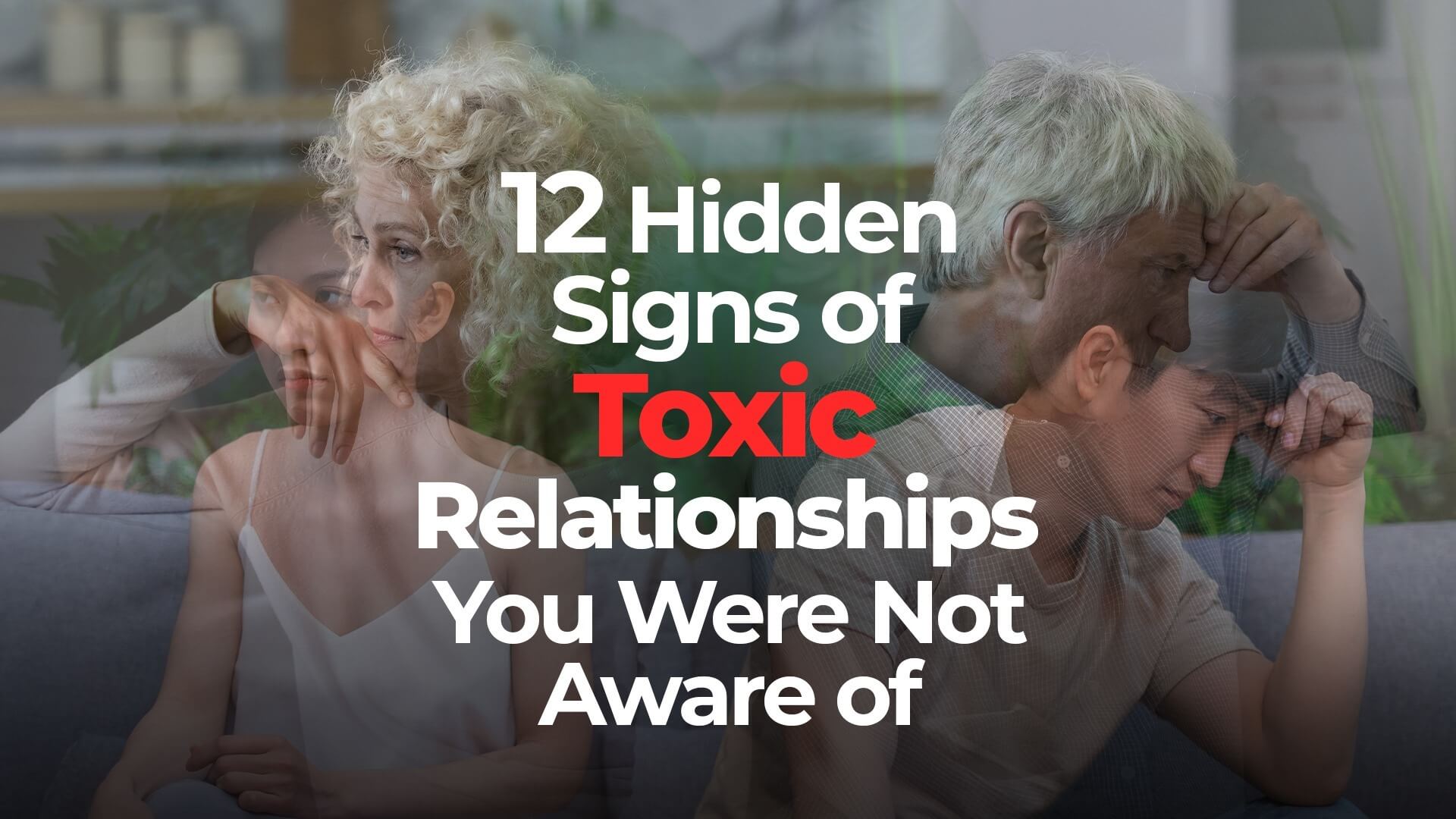
The person you love may be slowly destroying you, and you would not even see it coming.
Does any of this sound familiar?
- You walk on eggshells in your own home, carefully choosing every word before you speak, terrified of setting something off?
- You used to be confident, social, full of life, and now you barely recognise the person staring back at you in the mirror?
- You have started wondering if you are the problem. If maybe you are too sensitive, too needy, too much?
If you nodded at even one of these, keep reading. This is for you.
I have spent over two decades sitting across from people in therapy rooms, aura scan sessions, emotional blueprint sessions, life coaching sessions, and crisis calls.
People who were brilliant, warm, deeply loving, and completely broken by a relationship they could not name as harmful.
Because here is what nobody tells you.
Toxic relationships rarely begin with cruelty. They begin with love. Real love. And then, so slowly you do not feel it happening, the ground shifts beneath you.
What follows are 12 signs I have seen again and again. Not to alarm you. But to help you see clearly, perhaps for the first time in a long time.
Part One — How You Feel Around Them
1. Nothing You Do Is Ever Good Enough
The way you dress. The way you handled a situation at work. The dinner you made. The joke you told.
There is always something.
At first, it sounds like feedback. Like they care. But over months and years, this constant low-level criticism does something quiet and devastating. It rewires the way you see yourself. You stop trusting your own choices. You start shrinking.
What to watch for
- Comments that feel small but land hard
- Apologising for things that do not actually need apologies
- Editing yourself constantly before speaking
Research in cognitive psychology shows that repeated negative feedback, even when framed as concern, activates the same neural pathways as emotional threat. Over time, the brain begins to associate your own decisions with danger. That is not sensitivity. That is conditioning.
What you can do
Write it down. Seriously. Keep a simple journal of moments that sting. Patterns become visible on paper in ways they never do inside your head.
2. You Feel Drained After Being Together
A relationship does not have to involve screaming or bruises to be damaging.
Sometimes the sign is simply this. You come home and you feel empty. Tired in a way that sleep does not fix. Like you have been performing instead of just living.
Ask yourself honestly
- Do you feel lighter when they are not around?
- Does time with them leave you more anxious, not less?
- Do you brace yourself before seeing them?
The nervous system cannot distinguish between a physically threatening situation and a chronically stressful relationship. Cortisol, the body’s primary stress hormone, stays elevated in both cases. This is why you feel tired even after a full night’s sleep. Your body is always preparing and in alert mode for what comes next.
These feelings are not fears or weakness. They are data. Your nervous system knows things your mind has not caught up to yet.
3. Your Boundaries Are Treated Like Inconveniences
Boundaries are not walls. They are the basic terms of how you need to be treated.
When someone repeatedly pushes past what you have asked for, whether that is alone time, privacy, or space after conflict, and then makes you feel guilty for asking in the first place, that is not love. That is control dressed up as love.
Examples that are easy to miss
- “You are being too sensitive” after you express a need
- Guilt-tripping after you say no
- Honouring your boundary once, then slowly eroding it again
A person who loves you will not punish you for having needs. Full stop.
Part Two — How They Treat You
4. They Need to Control Things
What you wear. Who you spend time with. How you reply to a text. Where you go.
Control in a relationship often masquerades as concern. “I just worry about you.” “I only say this because I love you.”
But love that needs to own you to feel secure is not love. It is fear. And you should not have to make yourself smaller to manage someone else’s fear.
Notice if you have started
- Asking for permission rather than making your own choices
- Avoiding certain people to prevent conflict
- Hiding small things just to keep the peace
Your freedom is not a threat to real love. In healthy relationships, it is celebrated.
5. They Make You Question Your Own Reality
This one is perhaps the most quietly damaging of all.
“That never happened.” “You are imagining things.” “You always do this. You twist everything.”
This is called gaslighting, and it works by making you distrust your own memory, your own perceptions, your own feelings. Over time, you stop reporting what you experience. You start filtering everything through their version of events.
Gaslighting is a well-documented form of psychological manipulation. It works because the brain, under repeated confusion and self-doubt, begins to rely on the other person’s narrative as a cognitive shortcut. This is not a character flaw in you. It is a neurological response to prolonged uncertainty. You are not weak. You are human.
Signs this may be happening
- You frequently feel confused after arguments, even when you were certain beforehand
- You apologise constantly but cannot quite explain what you did wrong
- You feel like you are losing your grip on what is real
You are not going crazy. Keep notes. Talk to someone you trust outside the relationship. Your reality is real.
6. They Go Silent When It Matters Most
Every couple has hard conversations. What matters is whether those conversations can actually happen.
When someone consistently shuts down, walks away, or goes cold the moment things get difficult, they are not protecting the peace. They are avoiding accountability. And the unresolved tension has nowhere to go except inward, where it quietly becomes resentment.
Healthy conflict is not pleasant. But it is how trust is built.
If important conversations are consistently met with stonewalling, emotional withdrawal, or deflection, that is a wound that will keep reopening.
Part Three — The Bigger Picture
7. You Are Doing All the Emotional Work
You are the one who apologises first, even when you do not think you were wrong. You are the one who keeps the relationship afloat through every storm. You are the one tracking their moods, managing their reactions, softening your truth to protect their feelings.
Meanwhile, who is doing that for you?
In psychology, this is called a pursuer-distancer dynamic. One person carries the emotional weight while the other withdraws. Research on relationship satisfaction consistently shows that perceived inequity in emotional effort is one of the strongest predictors of long-term resentment and eventual breakdown.
Ask yourself
- When was the last time they checked in on how you are doing?
- Do you feel emotionally cared for… or emotionally managed?
- Are you exhausted in a way you cannot quite explain to anyone?
You deserve someone who shows up for you with the same effort you pour out.
8. They Have Pulled You Away From Your Inner Circle
This one is subtle and gradual. It rarely happens all at once.
Maybe they made small comments about your friends. They made their discomfort known every time you made plans without them. Maybe family dinners started creating friction. Maybe you started saying no to invitations because it was easier than dealing with the aftermath.
And one day you look up and realise you are very alone.
Isolation is one of the most powerful tools of a toxic dynamic. When your support network disappears, so does your ability to reality-check what is happening to you.
Hold onto your people. Especially when someone makes it hard.
9. Jealousy Has Become a Way of Life
A moment of jealousy is human.
A pattern of surveillance, checking your phone, questioning your friendships, accusing you without evidence, is something else entirely.
It is not proof that they love you deeply.
It is proof that control has replaced trust.
And a relationship without trust is not a relationship. It is a cage.
10. You Never Know Which Version of Them You Are Going to Get
The unpredictability alone is exhausting.
You learn to read the room the moment they walk in.
You adjust yourself, your energy, your tone, your posture, based on what mood they are carrying. You have become an expert at managing a person instead of simply loving them.
That is survival. Not a partnership.
In trauma-informed therapy, this is called hypervigilance, and it is the body’s survival response to emotional unpredictability. Living in this state long-term can manifest as chronic anxiety, insomnia, and symptoms that closely resemble depression, even when the relationship feels loving at other times. Your body is not overreacting. It is trying to protect you.
11. Mistakes Are Always Your Fault
Accountability, the ability to say “I got that wrong, I am sorry”, is one of the clearest signs of emotional maturity.
When someone cannot do this. When every argument ends with you somehow being the one who caused it, even when you came with a genuine grievance, growth becomes impossible.
Not just for the relationship. For you.
Because you can only give so many apologies you do not owe before you start to believe them.
12. You Feel Afraid
This is the one I want you to sit with.
Not afraid in a vague way. Afraid of their reaction. Afraid of saying the wrong thing. Afraid of what happens if you leave. Maybe, in some moments, afraid of them.
Fear should never be the backdrop of your love story.
If you feel physically or emotionally unsafe, please do not wait. Reach out to someone you trust, a counsellor, a helpline, a friend. Right now. Your safety comes before everything else on this list.
How to Start Dealing with a Toxi Relationship and Protect Yourself
You do not need to have all the answers today. You just need to begin.
- Trust what you feel. You have probably been talked out of your feelings for a long time. Start listening to them again.
- Name the patterns. Write things down. Awareness is the beginning of everything.
- Stay connected to people who know you. Do not let yourself become isolated.
- Talk to a therapist or counsellor. Not because something is wrong with you, but because you deserve a space where someone is entirely in your corner.
- Communicate your needs clearly, calmly, once. What happens after tells you everything you need to know.
- Put your safety first. Always. Without negotiation.
A Few Questions I Hear Often
As a life coach and healer for the past 15 years, I have sat with hundreds of people during my coaching and healing sessions who were quietly suffering inside relationships they could not fully name or explain. And no matter the background, the age, or the story, a few questions always come up. Here are the ones I hear most often.
Q1. Can a toxic relationship actually get better?
A. Sometimes, yes, with genuine willingness on both sides and professional support. But change has to be real, sustained, and not conditional on your silence. And your safety is never something you compromise while waiting to find out.
Q2. How do I know if I am overreacting?
A. If you have been told you are “too sensitive” enough times, this question will feel very familiar. A good rule of thumb is if something consistently hurts you, it warrants attention. Your pain is not an overreaction. It is information.
Q3. What if I still love them?
A. You can love someone and still recognise that the relationship is harming you. Love is real, and it is also not always enough. You are allowed to love someone and still choose yourself.
One Last Thing
You came to this article for a reason.
Maybe you are not ready to call it toxic yet. Maybe you just needed to see it written down somewhere. You have been carrying this alone for a long time and needed someone to say yes, what you are feeling is real.
It is real.
You are not broken. You are not too much. You are not the problem.
You deserve to feel safe, seen, and loved in a way that does not cost you yourself, your peace, your growth, or your pure being.
And that, more than anything else I could say, is worth fighting for.
If any part of this article made you pause and think, that feeling is worth exploring. Sometimes the clearest next step is simply having a safe space to be heard, understood, and guided without judgment. Whether through a one-on-one healing session or an Aura Scan Session, we can go deeper together, identifying the patterns that are keeping you stuck, understanding where they come from, and building a path toward the love and peace you genuinely deserve.
You do not have to figure this out alone.
Reach out, and let us begin.
Reach Dr. Chandni’s support team at +918800006786 and book an appointment.





























 facebook
  X
X  youtube
  whatsapp
  instagram
  linkedin