
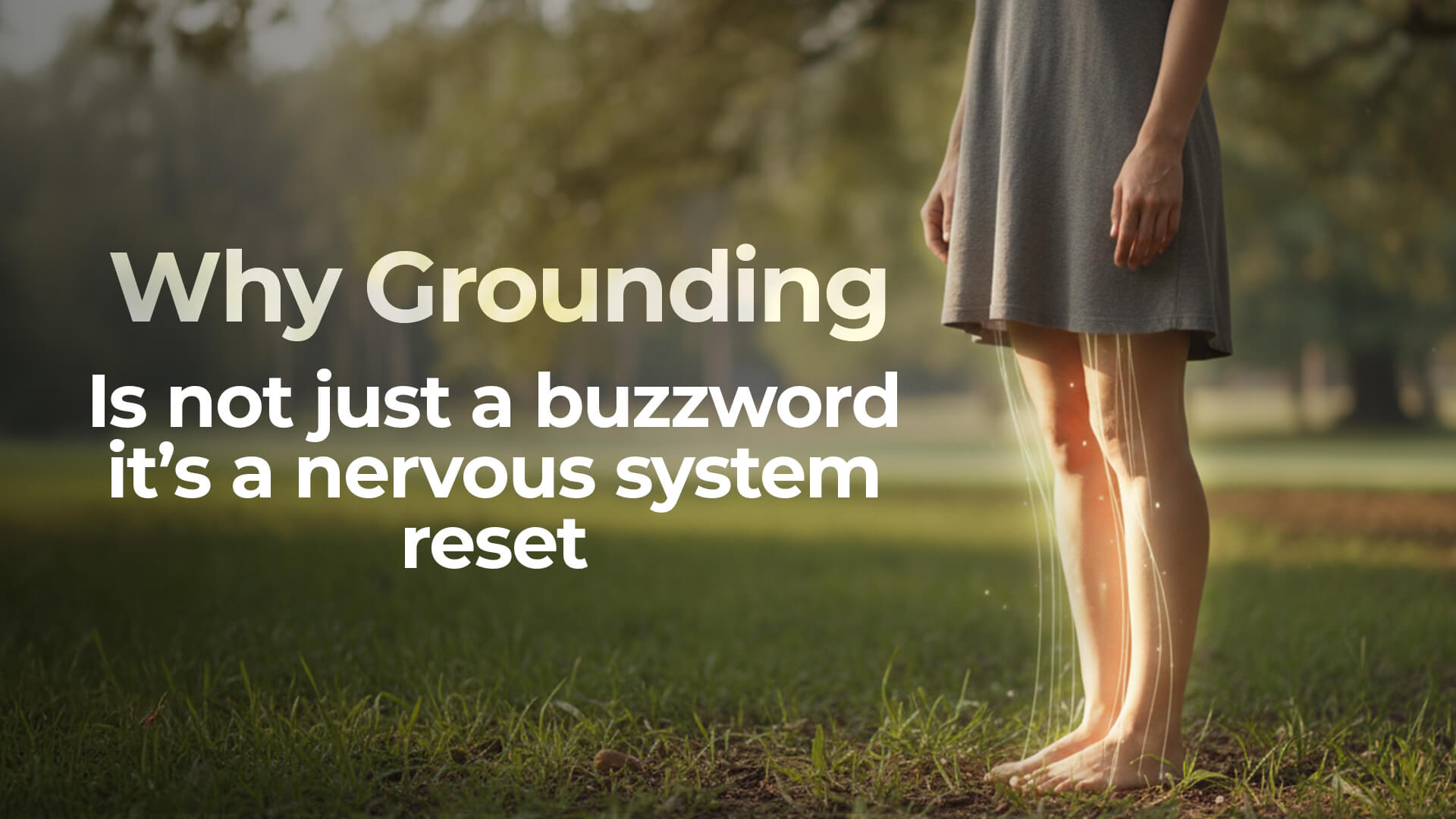
In wellness circles, the word ‘grounding’ gets used often, sometimes so much that it sounds like just another self-care trend. But grounding is far more than a buzzword. It’s a natural, body-based practice that restores balance to your nervous system. Everyday life constantly pulls you upward, into thoughts, plans, screens, and worries. You spend much of your time in your head, not in your body. Grounding helps you return to the present moment, reconnect with your senses, and reminds your body that it’s safe. When you ground, you’re not escaping life; you’re re-entering it with calm awareness.
What Grounding Really Means
To be grounded is to feel stable, connected, and safe within your body and environment. It’s the opposite of being scattered, anxious, or overstimulated. Grounding activates the body’s parasympathetic nervous system, the part responsible for rest, repair, and regulation. When you feel grounded, your breath slows, your muscles relax, and your mind becomes clearer. It’s not about controlling your thoughts; it’s about shifting your attention back into your body and the present moment.
Why You Need Grounding More Than Ever
Modern life overstimulates the nervous system. Constant alerts, deadlines, and digital noise keep you in ‘fight or flight’ mode. The body can’t tell the difference between real danger and emotional pressure; it reacts to both as stress. Over time, this leads to:
- Racing thoughts and shallow breathing
- Poor sleep and fatigue
- Emotional reactivity or numbness
- Trouble focusing or relaxing
Grounding interrupts this cycle. It signals to your body: You are safe now. This simple reset can restore balance faster than mental effort alone.
Signs You’re Ungrounded
- Feeling spacey, distracted, or detached from your surroundings
- Overthinking or replaying past events
- Emotional highs and lows that feel hard to control
- Forgetting small details or misplacing things often
- Restlessness or a sense of ‘floating’ through your day
How Grounding Resets the Nervous System
Grounding practices help your body move from stress mode (sympathetic activation) to calm mode (parasympathetic response). Grounding essentially tells your nervous system, ‘It’s okay to relax. Here’s what happens when you are grounded:
- Your breathing deepens and steadies.
- The heart rate slows down.
- Muscles loosen, reducing tension and pain.
- The mind quiets because the body feels safe again.
- Emotional regulation improves, with fewer outbursts and quicker recovery from stress.
Practical Grounding Techniques for Everyday Life
- Feel your feet
- Use sensory awareness
- Ground through breath
- Touch natural elements
- Move with awareness
- Ground through sound
- Journaling or mindful writing
Stand tall, with bare feet on the floor or grass. Notice the contact between you and the ground. Imagine your weight being supported fully. Breathe deeply until your body softens.
Focus on five things you can see, four you can touch, three you can hear, two you can smell, and one you can taste. This anchors you in the present through your senses.
Try box breathing, inhale for 4 counts, hold for 4, exhale for 4, and hold again for 4. Repeat until your body feels centred.
Soil, water, wood, or plants, nature has a calming charge that syncs with your body’s energy. Even a few minutes of contact helps regulate emotions.
Walk slowly, noticing each step. Gentle yoga, stretching, or tai chi also brings your attention back to your body.
Humming, chanting, or listening to deep rhythmic sounds activates the vagus nerve, supporting nervous system balance.
Write about how you feel without judgement. Putting emotions into words clears mental clutter and calms inner noise.
The Emotional Side of Grounding
Grounding isn’t only physical; it’s emotional regulation in action. When you ground regularly, you create a stable inner base to hold emotions without being swept away by them. You begin to respond instead of react. You notice triggers sooner and recover faster from conflict. Your nervous system becomes resilient, not rigid. Grounding doesn’t remove stress; it changes your relationship with it.
When Grounding Feels Hard
In moments of deep stress, grounding may not feel immediate. That’s normal. Sometimes, your body needs time to trust safety again. Start small, slow breathing, a warm drink, and a soft touch on your arms. Over time, these cues rewire your system to find calm faster. If grounding consistently feels difficult, trauma-informed therapy or energy healing can help you re-establish inner safety.
Reflection Prompts
- When during my day do I feel most ungrounded?
- What helps me return to presence, touch, breath, sound, or movement?
- How does my body feel when it’s truly calm?
- What small ritual can I practice daily to remind my system that I’m safe?
Frequently Asked Questions (FAQs)
Q1. How often should I ground myself?
A few minutes daily is ideal, especially during transitions like waking up, finishing work, or before sleep.
Q2. Can grounding replace meditation?
They complement each other. Grounding stabilises the body, making meditation easier and more effective.
Q3. Does grounding really affect physical health?
Yes. Studies show it can reduce inflammation, improve sleep, and lower stress hormones.
Q4. What if I can’t go outdoors to the ground?
You can ground anywhere by touching a wall, focusing on breath, or simply noticing your body in space.
Q5. How quickly does grounding work?
Often within minutes. The nervous system responds to cues of safety almost instantly.
Grounding isn’t a trend; it’s a return to your natural state of balance. In a world that constantly pulls your attention outward, grounding brings you back home to your body. It’s not about escaping stress but reminding your nervous system that peace is still available here, now, in every breath and every step.
Reach Dr. Chandni’s support team at +918800006786 and book an appointment.



































 facebook
  X
X  youtube
  whatsapp
  instagram
  linkedin