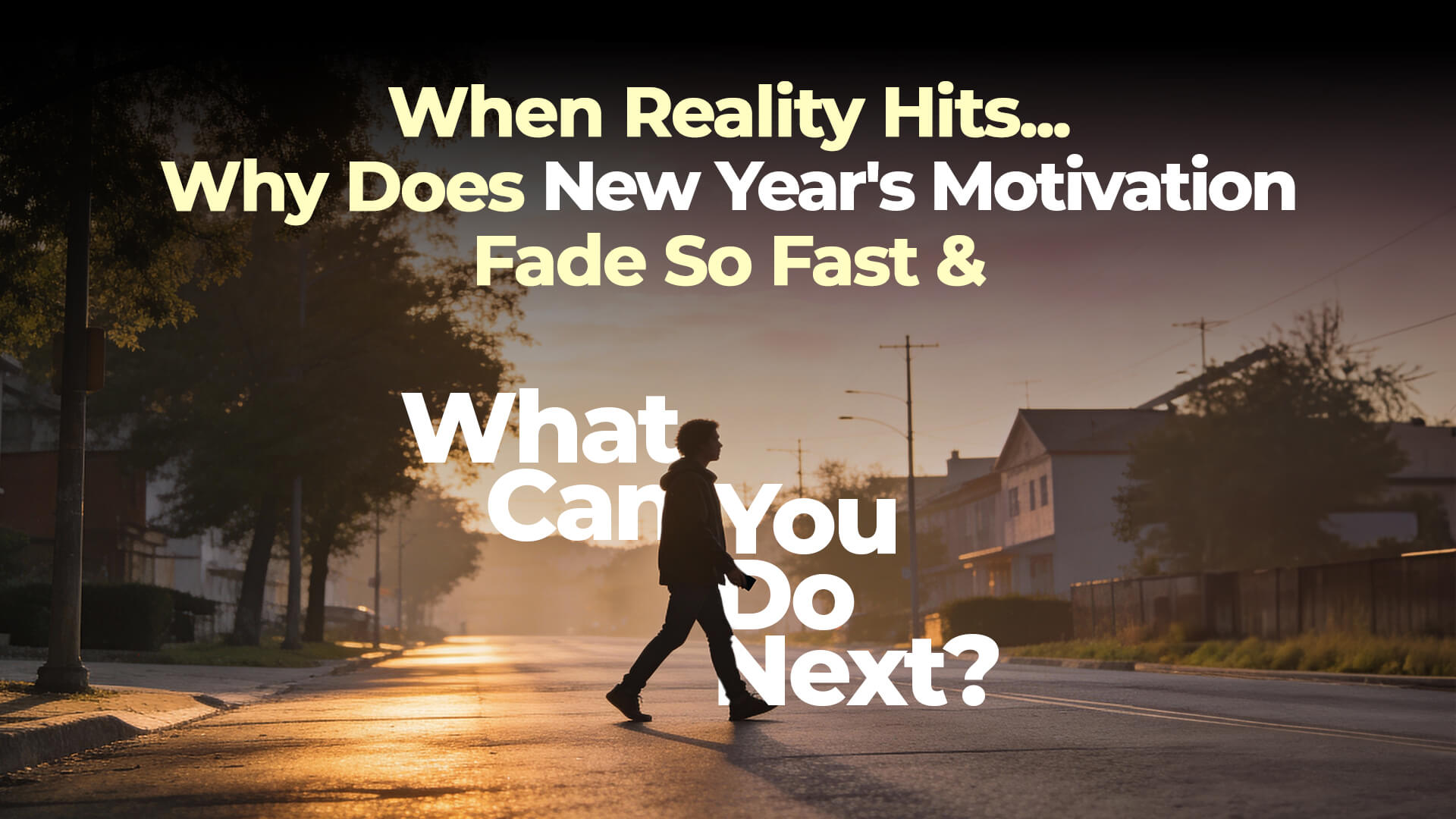
The New Year often begins with energy. Fresh plans, motivation, and a sense of possibility fill the first few weeks. Then, quietly, the excitement fades, and routines return, with old habits resurfacing. The momentum you felt in the first few weeks of January starts to feel distant. This phase is normal, yet many people mistake it for failure. They assume something went wrong. In reality, nothing has. The drop in excitement is not a sign to give up. It’s a signal to shift how you relate to your goals, your energy, and yourself. What matters now is not excitement, but alignment.
Why the Excitement Always Fades
Excitement is emotional fuel. It’s powerful but temporary. It comes from novelty, not sustainability. At the start of the year, the mind is hopeful, the nervous system feels open, and change feels possible. As weeks pass, reality settles in. Discipline replaces novelty. Familiar challenges return. This transition exposes whether your goals were built on inspiration alone or on deeper clarity. When excitement fades, the real work begins.
The Mistake Most People Make
When motivation drops, many people respond by pushing harder. They add pressure, guilt, or unrealistic expectations. This approach backfires. Forcing yourself when energy is low creates burnout, resistance, self-criticism, and loss of trust in yourself. Instead of asking, ‘Why am I not motivated anymore?’ ask, ‘What kind of support do I need now?’ The answer changes everything. Shift From Motivation to Meaning. Motivation is emotional. Meaning is steady.
When excitement wears off, reconnect with why you started. The deeper motive, not the obvious one. Ask yourself:
- What does this goal give me emotionally?
- What problem does it solve in my life?
- Who do I become by following through?
When goals are connected to values, not just outcomes, they survive the loss of excitement.
Practical Ways to Reground Yourself
- Lower the intensity, not the commitment
- Revisit your expectations
- Create a structure that supports you
- Focus on identity, not outcomes
- Check your emotional state
You don’t need to quit. You need to slow down. Instead of an all-or-nothing effort, choose consistency with shorter routines, smaller steps, and simpler actions. Progress made calmly lasts longer than progress made in a rush.
Sometimes excitement fades because expectations were unrealistic. Check in with yourself regularly and ask, ‘Did I expect quick results?’ ‘Was I trying to change too much at once?’ ‘Did I leave space for rest?’ Adjusting expectations is not failure. It’s maturity.
When excitement fades, structure carries you forward. Supportive structure includes fixed times for habits, clear boundaries around energy, fewer decisions, not more, and structure reduces reliance on willpower.
Outcomes take time. Identity builds daily. Instead of asking, ‘Am I getting results?’ ask, ‘Am I showing up as the person I want to become?’ ‘Am I acting in alignment today?’ Identity-based progress stays meaningful even when results are slow.
Loss of excitement often hides emotional fatigue. You may be carrying unresolved stress, processing disappointment, or feeling pressure to perform. Pause and name what you feel so that emotional clarity restores energy faster than pushing through discomfort.
When You Feel Like Giving Up
The urge to quit usually appears when effort feels heavy. Before you act on it, pause. Ask yourself:
- Am I tired or truly uninterested?
- Do I need rest or direction?
- Would I regret stopping completely?
Often, what you need is not quitting but recalibration.
The Role of Rest in Long-Term Change
Rest is not a reward. It’s a requirement. Without rest, your focus drops, discipline weakens, and emotional resilience fades. Rest resets your nervous system so you can continue with clarity instead of force. Include relaxation in your routine as a strategy rather than an afterthought.
Reconnecting With Small Wins
Excitement fades when progress feels invisible. Shift your focus to what you’ve already sustained, habits you didn’t quit, and awareness you’ve gained. Small wins restore trust in yourself, and trust is more powerful than excitement.
When Progress Feels Slow
Slow progress doesn’t mean nothing is happening. It often means foundations are being built. Growth beneath the surface includes:
- New thought patterns
- Emotional regulation
- Better boundaries
- Increased self-awareness
These changes may not feel dramatic, but they create lasting transformation.
Reflection Prompts to Reset Momentum
- What feels heavy right now?
- What part of my routine feels forced?
- What small adjustment would make this easier?
- In this stage, what am I understanding about myself?
Frequently Asked Questions
Q1. Is it normal to lose motivation after January?
A: Yes, motivation is temporary. Sustainable change relies on structure and alignment.
Q2. Should I abandon goals that no longer excite me?
A: Not immediately. First, assess whether the goal lacks meaning or the approach needs adjustment.
Q3. How do I stay consistent without motivation?
A: Create routines that don’t depend on emotion. Consistency grows from structure, not excitement.
Q4. What if I feel behind already?
A: There is no fixed timeline. Progress is personal and non-linear.
Q5. Can goals evolve after the New Year begins?
A: Yes. Revising goals shows self-awareness, not weakness.
The end of New Year’s excitement is not the end of possibilities. It’s the beginning of real alignment. When motivation fades, clarity, consistency, and self-trust take its place. This phase asks you to move from emotional highs to grounded commitment. If you listen closely, it teaches you how to build a life that lasts beyond the excitement and holds steady through the ordinary days that truly shape you.
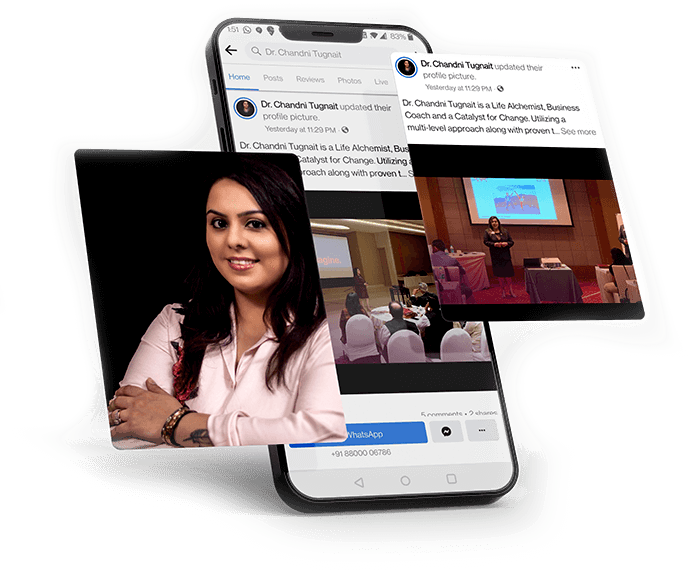
Reach Dr. Chandni’s support team at +918800006786 and book an appointment.






























 facebook
  X
X  youtube
  whatsapp
  instagram
  linkedin