
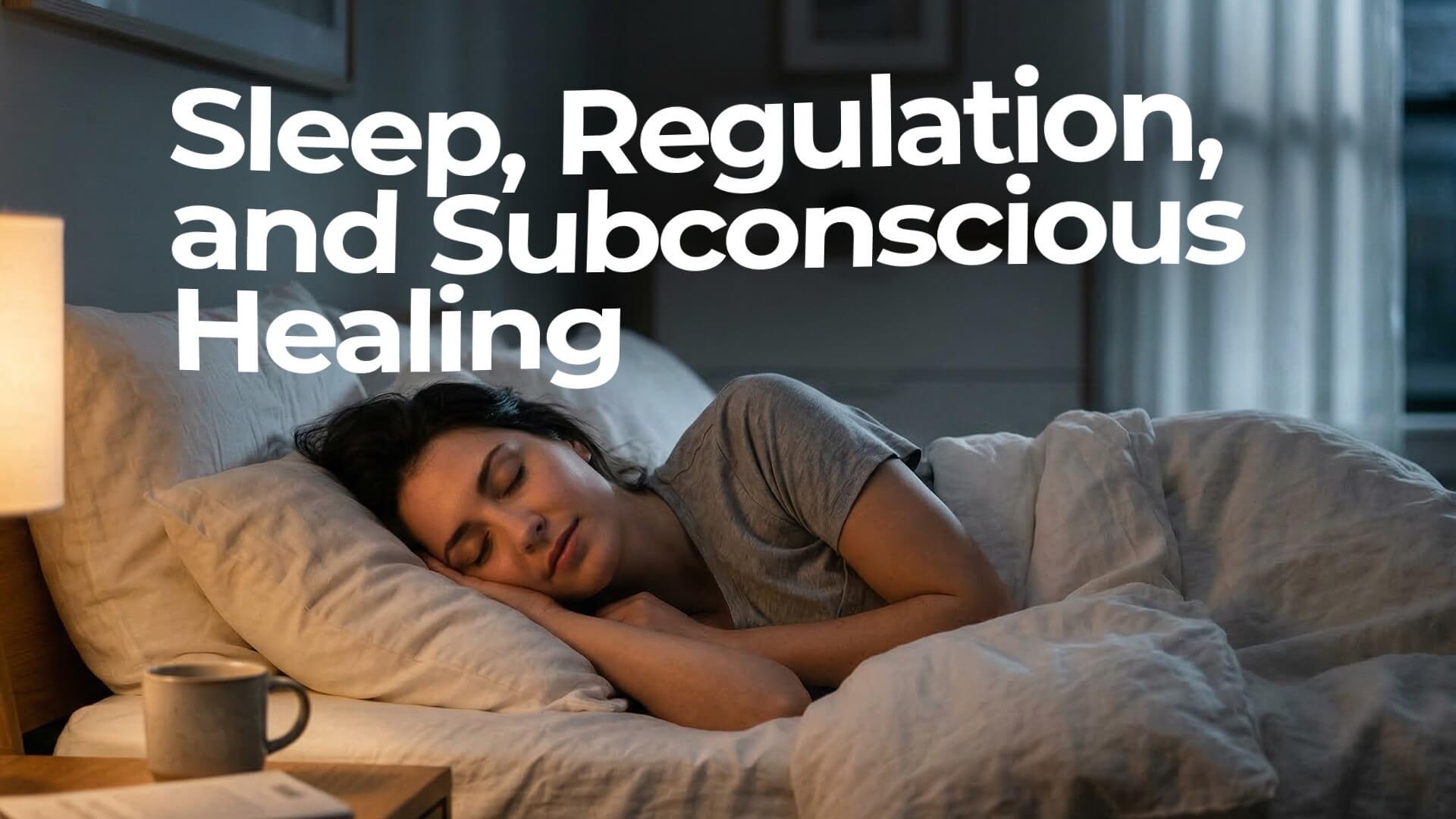
On World Sleep Day, conversations usually revolve around hours, routines, and productivity. How many hours should you sleep? How to fall asleep faster? How to wake up refreshed? But sleep is more than just rest. Sleep is regulation, repair, and subconscious healing in motion.
When sleep is disrupted, it is rarely just about the schedule. It often reflects nervous system overload, emotional suppression, or mental hyperactivity. To understand sleep deeply, we must understand what the body is trying to process when consciousness turns off.
Why Sleep Is Not Just Physical Rest
During sleep, your body repairs tissues and restores energy. But equally important, your brain reorganises emotional experiences. Research shows that sleep:
- Processes emotional memory
- Reduces stress hormone levels
- Strengthens learning
- Improves impulse control
- Regulates mood
Without adequate sleep, emotional reactions intensify, small stressors feel overwhelming, patience shortens, and anxiety rises. Sleep is essentially emotional hygiene.
The Nervous System and Sleep
The nervous system has two primary states, activation and regulation. When you live in constant activation, due to stress, screens, performance pressure, or emotional suppression, your body struggles to shift into rest mode. You may experience:
- Difficulty falling asleep
- Frequent waking
- Light, unrefreshing sleep
- Racing thoughts at night
- Early morning anxiety
This is not insomnia alone, but a nervous system that does not feel safe enough to power down. Regulation is the bridge between wakefulness and deep sleep.
The Subconscious Mind at Night
When you sleep, your conscious defences soften, and the subconscious becomes active. Dreams, emotional processing, and memory consolidation happen beneath awareness. The mind replays unresolved experiences and attempts to integrate them. If emotional experiences are unprocessed during the day, the subconscious works harder at night. This can lead to vivid dreams, restless sleep, or sudden awakenings, and sleep becomes a reflection of emotional backlog. Healing begins when the day and night are connected, not separated.
Why Modern Life Disrupts Sleep
Modern life is essentially a marathon that never reaches a finish line, making it incredibly difficult for our nervous systems to find balance. Between the constant hum of digital stimulation, the habit of late-night scrolling, and a steady stream of distressing news, our brains are kept in a state of high alert. This is compounded by irregular schedules and the weight of unresolved emotional conversations that linger long after the lights go out.
The reality is that your brain doesn’t have an ‘instant off’ switch, as it requires a deliberate transition period to decompress. When we skip this wind-down, sleep remains shallow and unrefreshing because the mind is still processing the day’s chaos. Ultimately, true sleep hygiene goes beyond physical comforts like a dark, cool room; it requires emotional closure and the mental space to let go before drifting off.
Emotional Suppression and Nighttime Anxiety
Many people report that anxiety increases at night. During the day, distraction masks discomfort, but at night, silence amplifies it. If you avoid difficult conversations, grief, anger, fear, and overwhelm, then these emotions resurface when external noise fades. The body remembers what the mind postpones. Subconscious healing requires daytime acknowledgement.
The Science of Regulation Before Sleep
To enter deep sleep, the parasympathetic nervous system must activate, because when the body feels safe, the subconscious can process without triggering stress responses. This is your rest-and-digest mode. You can support this shift by:
- Slowing your breathing
- Reducing light exposure
- Limiting stimulating content
- Creating predictable bedtime rituals
How Sleep Supports Healing
Deep sleep stages regulate emotional centres in the brain, particularly the amygdala. After sufficient rest, emotional reactivity decreases, and you respond instead of react. Sleep also:
- Clears metabolic waste from the brain
- Balances hormones
- Restores immune function
- Enhances cognitive clarity
- Healing is not only psychological. It is biological.
Creating a Sleep Regulation Ritual
- Close emotional loops
- Practice slow breathing
- Reduce sensory input
- Gentle affirmation
- Keep consistency
Before bed, write down any lingering thoughts, and do not try to solve them, just acknowledge them.
Inhale for four counts, exhale for six, and repeat this exercise for two minutes.
Before you go to bed, dim your lights and put your phone on silent so that there is no sensory input in your environment to have uninterrupted sleep.
Say quietly: “It is safe to rest.” “I release today.” “My body knows how to restore.”
Sleep and wake at similar times, as predictability builds nervous system trust.
When Sleep Problems Persist
If sleep remains disrupted, look deeper and ask yourself:
- What am I avoiding emotionally?
- Where am I overextending?
- Is my body ever truly relaxed during the day?
- Do I equate rest with lazinesli
Sleep disturbances often mirror lifestyle misalignment, and addressing the root causes improves rest more than quick fixes.
The Role of Self-Compassion
Many people become frustrated with their sleep patterns, as they try to control sleep forcefully. But sleep cannot be forced, it must be allowed. Self-compassion reduces performance anxiety around rest, and when pressure drops, sleep improves. You have to understand that your body is not your enemy, but it is communicating with you.
Reclaiming Sleep as Sacred
In a culture that glorifies busyness, sleep is often sacrificed. But sleep is not lost time, but it is restoration time. When you protect sleep, you protect:
- Emotional balance
- Cognitive function
- Physical resilience
- Long-term health
Frequently Asked Questions
Q1. Can emotional stress disrupt sleep even if I feel fine during the day?
A. Yes. suppressed stress often appears at night.
Q2. How much sleep is ideal?
A. Most adults require seven to nine hours, but quality matters as much as duration.
Q3. Do dreams help emotional healing?
A. Yes, dreams often process unresolved experiences.
Q4. Can breathwork improve sleep?
A. Slow breathing activates parasympathetic regulation and improves sleep onset.
Q5. Is waking at 3 a.m. psychological?
A. Often, it reflects stress hormones rising due to nervous system activation.
Sleep is not passive but active healing. When you prioritise regulation during the day and emotional acknowledgement before night, your subconscious can restore rather than react. On World Sleep Day, move beyond counting hours, create safety, close emotional loops, and slow down your system. When the body feels secure, sleep becomes more than rest. It becomes repair, integration, and quiet renewal. World Sleep Day is not only about awareness but also about reprioritisation.
Reach Dr. Chandni’s support team at +918800006786 and book an appointment.
































 facebook
  X
X  youtube
  whatsapp
  instagram
  linkedin