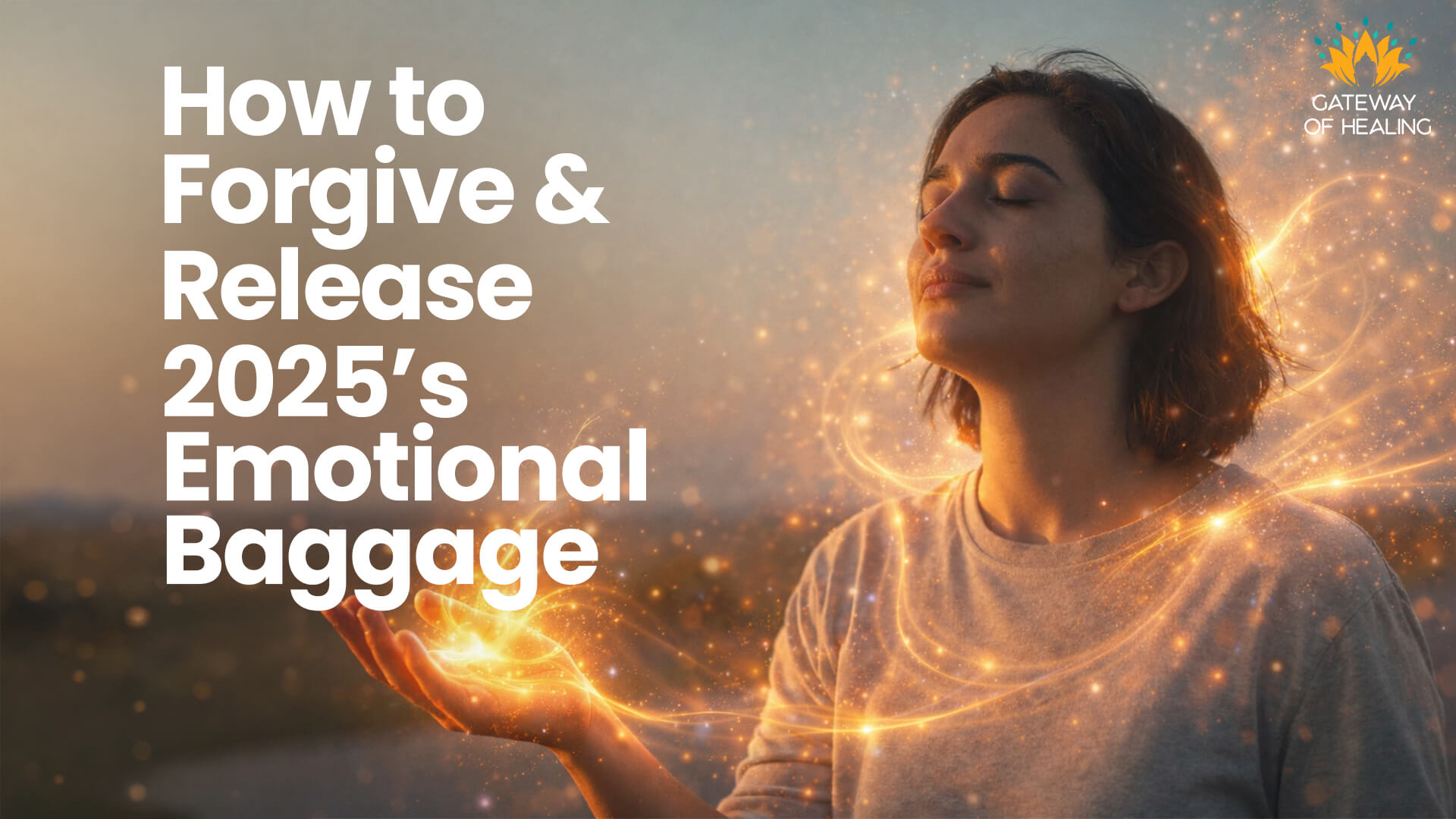
Every year leaves emotional fingerprints on our lives. Some moments strengthen us, some stretch us, and some quietly break us in ways we only notice much later. As 2025 comes to a close, many people are thinking about goals, resolutions, and fresh starts. Yet very few are asking a more important question.
‘What am I still carrying from this year that my future self cannot afford to drag along?’
Emotional baggage is not just about memories. It is about the hurt, resentment, guilt, regret, or disappointment that still lives inside those memories. When we do not process them, they turn into invisible weight. This weight shows up as overthinking, emotional shutdown, irritability, self-doubt, or fear of trusting again. To step into a new year fully, you do not only need a plan. You need a release. Forgiveness is the emotional reset that lets you move forward lighter, clearer, and more in charge of your life.
What Emotional Baggage Really Is
Emotional baggage is the collection of unresolved feelings you carry from past events, big or small. It is not always dramatic. It does not mean you are weak. It means you are human. The problem begins when old experiences start dictating present choices and future possibilities. Sometimes it is subtle and quiet. It can look like:
- Holding grudges long after the situation ended.
- Replaying one conversation in your head for months.
- Feeling anxious when something reminds you of an old hurt.
- Overreacting in the present because of unhealed pain from the past.
Why Forgiveness Feels So Hard
Forgiveness is often misunderstood. Many people avoid it because they think it means:
- Saying what happened was ‘ok’.
- Forgetting the incident completely.
- Letting the person back into their life.
- Losing power or self-respect.
In reality, forgiveness is none of these. Forgiveness is an internal process, not an external approval. It is a conscious choice to stop letting an old wound control your energy, thoughts, and emotions. What makes it hard is that pain often feels tied to identity. You create an inner dialogue where ‘I was betrayed’ becomes ‘I am not worthy’, and ‘I failed’ becomes ‘I am a failure.’
To forgive, you must separate the event from your identity. The event happened. You are still evolving.
How Forgiveness Frees Your Future
Forgiveness is not a favour to the past. It is a commitment to your future. When you forgive and release emotional baggage, you:
- Reduce mental noise and overthinking.
- Free emotional space for joy, creativity, and connection.
- Heal your nervous system from chronic stress and tension.
- Make decisions based on current reality, not old fears.
- Strengthen your sense of self and inner safety.
Forgiveness does not erase what happened. It removes the emotional hook that kept you attached to it.
Practical Ways to Forgive and Release 2025
- Name what still hurts
- Acknowledge your real feelings
- Separate the person from the pattern
- Choose the lesson you want to keep
- Create a personal release ritual
- Forgive yourself too
Sit with yourself and honestly ask, ‘What from 2025 still feels heavy in my body?’ It could be a conflict, a breakup, a professional setback, a broken promise, or something you regret doing or not doing. Naming it clearly is the first step to releasing it.
Go beyond ‘I am fine.’ Allow yourself to feel the full truth. Were you hurt, disappointed, embarrassed, abandoned, or betrayed? Suppressed feelings do not vanish. They store themselves in the body and show up as triggers later.
Instead of labelling someone as ‘bad’, try to see the behaviour as a pattern. This keeps you from internalising the hurt as a statement about your worth. You can say, ‘Their actions were unhealthy,’ without turning it into, ‘I deserved this.’
Every painful experience carries a lesson. It might have taught you to value your boundaries, listen to your intuition, or stop overextending yourself. Ask, ‘What did this experience teach me about how I want to live, love, or work from now on?’ Keep the lesson. Release the resentment.
You can journal and tear the page, write a letter you never send, breathe out the memory during meditation, or visualise handing the situation back to the universe. Say to yourself, ‘I release this story from my body, my mind, and my energy.’ Rituals signal to your system that a chapter is truly closing.
Often, the heaviest baggage is self-blame. You may be angry with yourself for staying too long, not speaking up, trusting the wrong person, or ignoring red flags. Remind yourself. You did the best you could with the awareness and capacity you had at the time. You are wiser now. Self-forgiveness is the foundation of any real emotional reset.
The Cost of Holding On
The longer you carry unresolved hurt, the more it becomes part of your identity. Instead of saying, ‘This happened to me,’ you start living as if, ‘This is who I am now.’ That is the real loss. Holding on to emotional baggage may feel like self-protection, but it comes with hidden costs:
- Chronic stress, fatigue, or burnout.
- Difficulty trusting people, even those who mean well.
- Overreacting or shutting down in relationships.
- Feeling emotionally ‘stuck’ or unable to move forward.
- Missing new opportunities because old fears still dominate.
The Emotional Reset of Letting Go
When you forgive and release 2025’s emotional baggage, you give yourself permission to start the new year without invisible chains. You are not erasing your story. You are choosing the version of the story that supports your growth.
Letting go may not happen in one day, but every small act of release matters. Every time you choose understanding over resentment, boundaries over bitterness, and self-compassion over self-criticism, you lighten your emotional load. You do not owe your pain a lifetime of loyalty.
Reflection Prompts
- What moment from 2025 still feels heavy when I think about it?
- What did that experience make me believe about myself?
- What lesson can I take from it that will help me in 2026 and beyond?
- What would forgiving this situation free me to do, feel, or become?
- What is one small release ritual I can do this week?
Frequently Asked Questions (FAQs)
Q1. Does forgiving someone mean I have to let them back into my life?
A: No. Forgiveness is an internal release. You can forgive and still choose distance, boundaries, or no contact if that is healthier for you.
Q2. What if the person never apologised?
A: Forgiveness is about your peace, not their apology. You are not waiting for their awareness to begin your healing. You can choose to let go without their participation.
Q3. How do I forgive myself for the mistakes I made in 2025?
A: Start by acknowledging that you were learning. Take responsibility without shaming yourself. Ask, ‘What will I do differently now?’ and let that be your redemption. Growth is a more powerful response than guilt.
Q4. Can I forgive and still feel hurt sometimes?
A: Yes. Forgiveness does not erase emotional memory. It reduces its control over you. It is normal for pain to resurface occasionally. The difference is that it no longer runs your life.
Q5. How long does it take to truly let go?
A: There is no fixed timeline. It depends on the depth of the wound and your willingness to process it. Be patient with yourself. Consistent small steps often create deeper healing than one big emotional breakthrough.
Strength is not just about what you can carry. It is also about what you can consciously put down. As you close 2025, choose to honour your experiences, extract the wisdom, and release the weight. You deserve to walk into 2026 lighter, freer, and emotionally aligned with the life you are ready to create.
Reach Dr. Chandni’s support team at +918800006786 and book an appointment.



























 facebook
  X
X  youtube
  whatsapp
  instagram
  linkedin
willl try your listed ways here, thanks
following you on Insta, go girl,, you are on the right path
good that i am in your email list, dont want to miss your thoughts,,,,
gratitude 🙏
you write soo good.. keep sharing, god bless
Your tinder expert cards are sooo cute
stunning blog
So so soooo important
I saw your article in newspaper today & came to your site, such important things you share for free. Thank god i found you. Bookmark ✅
thank you for this reminder
will try 🙁
I am unable to do so, will your consultation help. have shared my life issues on your whatsapp