
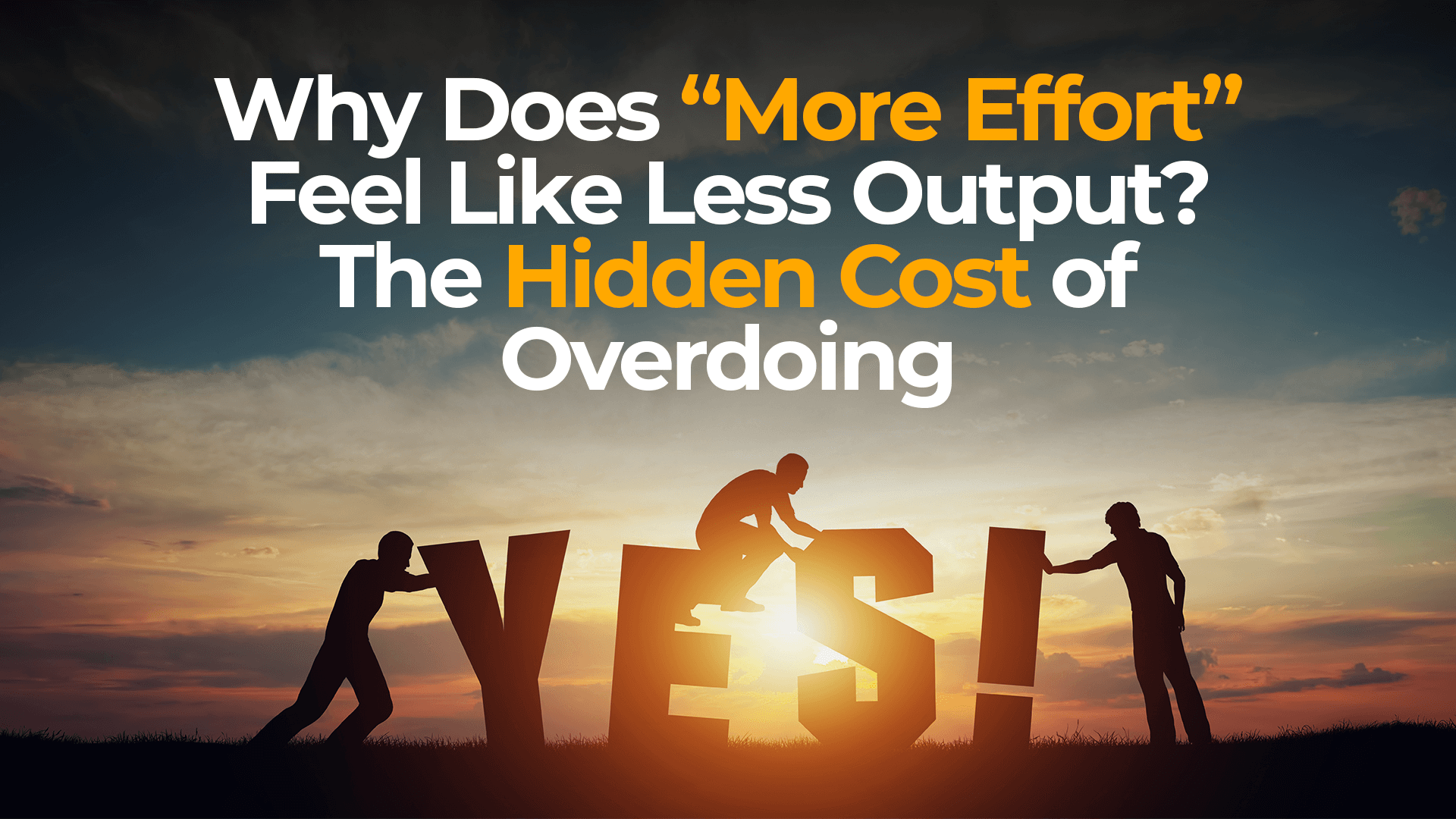
Modern life equates success with constant effort, that glorifies more hours, more tasks, and more pressure. Productivity is praised, rest is postponed, and busyness becomes a badge of worth. Yet many people feel exhausted, scattered, and unfulfilled despite doing more than ever before. Achieving more by doing less is not about lowering standards or ambition. It is about working with clarity instead of chaos. When energy, attention, and intention are aligned, less effort often produces stronger results. This shift is not lazy, rather, it is intelligent, grounded, and deeply sustainable.
Why Doing More Often Leads to Less
The mind is not designed for constant output. When overloaded, focus weakens and decision-making declines. Productivity drops even as effort increases. Doing too much creates:
- Mental fatigue
- Shallow focus
- Reactive decision-making
- Emotional burnout
- Loss of creative insight
More effort without clarity leads to diminishing returns. You stay busy but not effective.
The Illusion of Productivity
Busyness feels productive because it creates motion, but motion is not progress. When you measure success by how full your day looks, you lose sight of impact. Many tasks feel urgent but contribute little to long-term outcomes. The illusion of productivity keeps you moving without questioning direction. True productivity is about meaningful progress, not constant activity.
The Psychology Behind Doing Less
The nervous system plays a key role in performance. When overstimulated, the brain stays in reactive mode. In this state, it prioritises quick actions over thoughtful ones. When you are doing less, it helps to:
- Calm the nervous system
- Improve focus
- Enhance clarity
- Support better prioritisation
When the body feels safe, the mind works efficiently, as rest is not separate from performance, but it enables it.
What Doing Less Actually Means
Doing less does not mean doing nothing; rather, it is the practice of doing fewer things with greater intention. This shift looks like choosing depth over the fragmentation of multitasking, protecting your focused time, and learning to say no without the weight of guilt. By creating intentional space before taking action and trusting that pauses are a vital part of progress, you move away from the noise of constant activity. Ultimately, reducing distraction creates a deeper sense of presence, which naturally leads to more meaningful and high-quality outcomes.
How to Shift from Overdoing to Intentional Action
- Identify what truly matters
- Limit daily priorities
- Reduce decision fatigue
- Create white space
- Work in aligned rhythms
Not everything deserves equal energy, so ask yourself which tasks actually move you forward, and focus there.
Choose one to three meaningful tasks per day and complete them, instead of having a list of tasks and feeling overwhelmed. Completion brings clarity, while overloading creates resistance.
Simplify your routines so that when fewer decisions are required, mental energy stays available for what matters most
Treat unscheduled time not as “empty” or wasted space, but as a strategic pause. These intentional breaks in your schedule provide the mental breathing room necessary for new insights and creativity to emerge.
Honour your natural energy cycles, since productivity increases when action aligns with focus instead of force.
Why Rest Is a Performance Strategy
While rest is often misunderstood as a mere indulgence, it is actually a vital process of neurological recovery. Without it, our focus becomes fragmented, creativity declines, and emotional regulation begins to weaken, making it difficult to navigate daily challenges. Conversely, prioritising rest allows insight to sharpen, motivation to stabilise, and the quality of execution to improve. Ultimately, rest is not an optional luxury for long-term success; it is the essential fuel that restores your capacity to act effectively and sustainably.
The Role of Boundaries in Doing Less
Doing less requires boundaries, as it protects:
- – Your time
- – Your energy
- – Your mental clarity
Without boundaries, other people’s urgency becomes your obligation, and saying no creates room for aligned yeses. Boundaries are not barriers, but they are filters.
Why Letting Go Feels Difficult
Many people tie self-worth to effort, and doing less can trigger guilt or fear of being seen as unproductive. This discomfort is psychological, not practical. Ask yourself:
- Who am I trying to prove myself to?
- What happens if I slow down?
- Do my results improve when I rest?
Often, doing less highlights how much unnecessary pressure you’ve been carrying.
The Results of Doing Less Consistently
Adopting this intentional approach ultimately yields a compounding set of benefits, including clearer thinking, sharper decision-making, and heightened creativity. By prioritising depth and rest, you cultivate a sense of emotional steadiness that supports sustainable progress over time. This shift allows you to move beyond a state of constant reaction and begin truly responding to your environment, ensuring that your actions are guided by purpose rather than a frantic sense of urgency.
A Simple Do Less Alignment Ritual
At the start of your day, pause for one minute, and ask yourself:
- What truly needs my attention today?
- What can wait?
- What can be released?
Commit to doing fewer things but doing them well. Let this become a daily ritual.
When Doing Less Feels Uncomfortable
Discomfort often serves as a signal that a habit is changing, as the act of slowing down can feel deeply unfamiliar when you are accustomed to a life of constant urgency. Rather than resisting this feeling, you should notice the discomfort without judgement, allowing space for calm to eventually replace anxiety and for trust to supersede the need for control. Ultimately, choosing to do less is not about escaping your responsibilities; it is about the maturity of choosing those responsibilities wisely and engaging with them more intentionally.
Frequently Asked Questions
Q1. Can doing less really lead to better results?
A. Yes. Focused action outperforms scattered effort consistently.
Q2. Does this approach work in high-pressure environments?
A. Especially there. Clarity reduces mistakes and improves decision-making.
Q3. How do I know what to cut out?
A. Notice what drains energy without creating meaningful progress.
Q4. Is doing less the same as procrastinating?
A. No. Doing less is intentional. Procrastination avoids responsibility.
Q5. How long does it take to see results?
A. Clarity improves quickly. Sustainable results build over time.
Achieving more by doing less requires trust; trust in your judgement, trust in rest, and trust that clarity creates momentum. When you stop filling every moment with effort, space opens for insight, creativity, and meaningful progress. Doing less is not about lowering ambition. It’s about aligning action with purpose, so what you do carries weight, direction, and lasting impact.
Reach Dr. Chandni’s support team at +918800006786 and book an appointment.

































 facebook
  X
X  youtube
  whatsapp
  instagram
  linkedin